
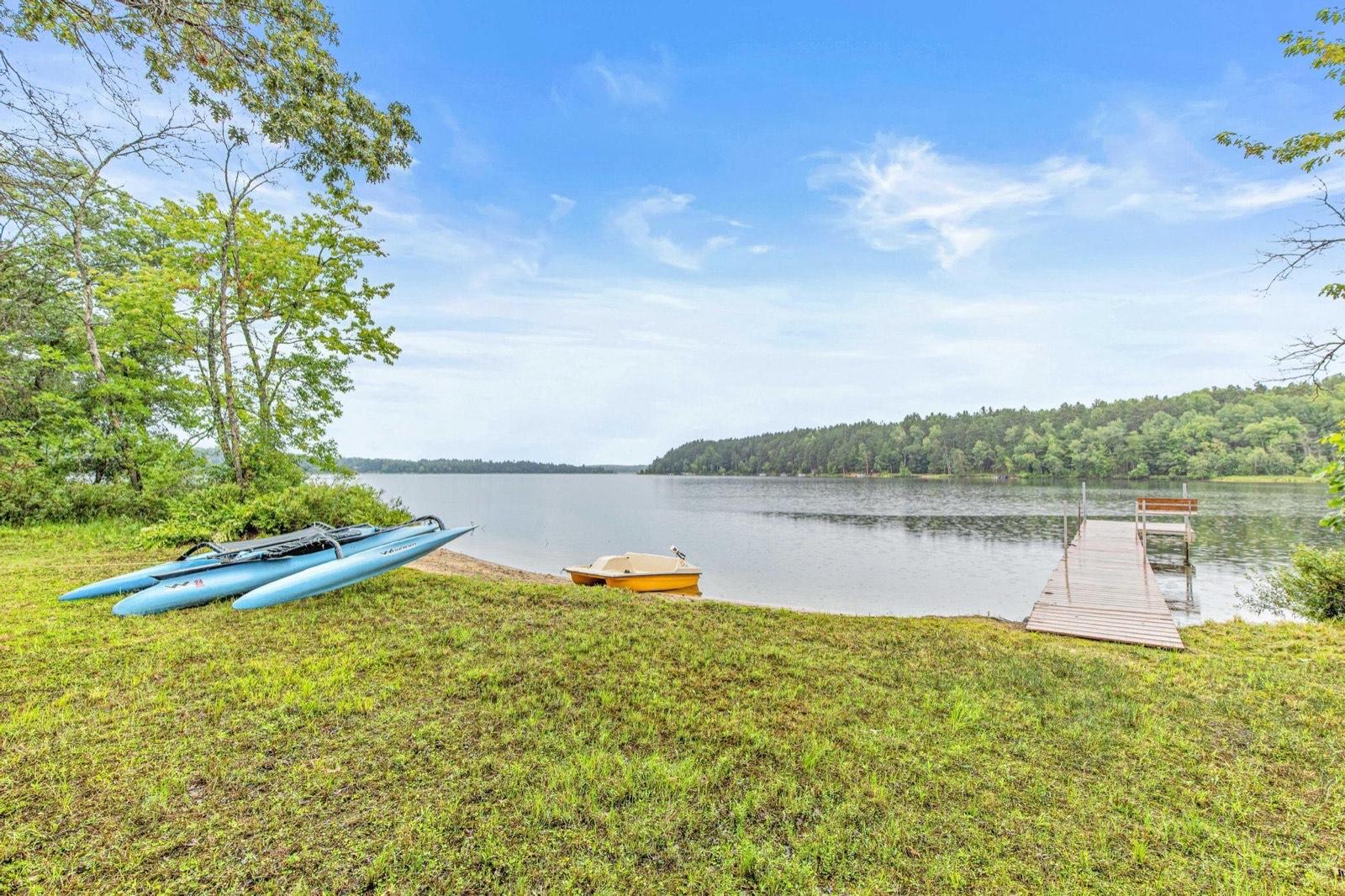
Kayaking Northern Wisconsin: Best Lakes and Rivers
Flat-water lakes for beginners, wild rivers for experienced paddlers, and where to base your trip
The Short Answer
Northern Wisconsin is one of the Midwest's best paddling destinations — 15,000+ lakes ranging from glassy protected bays to open crossings, plus the federally designated Namekagon River for moving water. Shell Lake and Teal Lake near Spooner are ideal for beginners. The Namekagon is excellent for experienced paddlers. Early morning is the best time on any northern Wisconsin water.
Why Northern Wisconsin for Paddling
Northern Wisconsin's paddling resources are staggering in scale. More than 15,000 lakes — ranging from 5-acre protected coves to the 15,300-acre Chippewa Flowage — sit within a few hours of each other in the northwest corner of the state. The Namekagon River, a federally designated Wild and Scenic River, runs for 98 miles through some of the least-developed forest in the Midwest. The Brule River, Flambeau River, and the interconnected Turtle-Flambeau Flowage add more options than any paddler could exhaust in a season.
What makes this region genuinely special for kayakers and canoeists isn't just the quantity of water — it's the quality. The lakes around Spooner and Shell Lake in Washburn County are clear and clean, with minimal motorboat traffic compared to the Hayward-area waters. The Namekagon is federally protected, meaning no development on the banks for most of its length: you can paddle for hours without seeing a house. Wildlife sightings — osprey, bald eagles, great blue heron, river otter, deer coming to drink — are routine, not remarkable.
5 Best Flat-Water Lakes for Beginners
Shell Lake — Washburn County
Shell Lake's protected western bays make excellent beginner water — calm even when wind picks up across the main lake. The public boat landing gives you easy put-in access, and the lake's clear water means you can see bottom in 8–10 feet, which is reassuring when you're still finding your balance. The lake is large enough (900+ acres) to feel like an adventure without being intimidating. Wildlife is abundant on the morning paddle along the north shore.
Teal Lake — Washburn County
Smaller and quieter than Shell Lake, Teal Lake is excellent for beginners who want calm water without motorboat interference. The lake is shallow enough in the bays to see the sandy bottom, with minimal current and very little weekday traffic. The surrounding shoreline is heavily wooded with minimal development — it feels remote even though it's close to Spooner. Ideal for first-time kayakers or families with young children in sit-on-top kayaks.
Long Lake — Washburn County
Long Lake's elongated shape creates a natural paddling corridor with good protection from cross winds. The lake stretches nearly 3 miles north to south, giving you a defined route with a clear start and end point — perfect for building confidence on the water. The western bank has stretches of undeveloped shoreline where you're likely to see eagles and osprey. Multiple public access points make shuttle logistics easy.
Balsam Lake — Polk County
Balsam Lake in Polk County (southwest of Spooner) is a larger, well-known paddling destination with a dedicated non-motorized zone on the south end that's ideal for kayaks and canoes. The protected area gives beginners completely calm water and a separate launch from the main landing. The surrounding town of Balsam Lake has a small downtown with lunch options — making it a good choice for a full-day outing.
Sand Lake — Burnett County
Sand Lake in Burnett County is shallow, warm, and ideal for summer flatwater paddling. The sand-bottom bays have exceptional water clarity, and the lack of aggressive motorboat traffic on most days makes it suitable for beginners. The lake sits within easy reach of several small resorts and cabin rental areas, making it convenient if you're staying in the area. Great for bird watching — the cattail margins host nesting species through late spring.
The Namekagon River: For Experienced Paddlers
The Namekagon River is one of the genuine gems of Midwest paddling. Designated as part of the National Wild and Scenic Rivers system in 1968, it flows 98 miles from Lake Namekagon near Cable southwest to its confluence with the St. Croix River at Trego — and then another 252 miles down the St. Croix to the Mississippi. The upper Namekagon (Cable to Hayward) is swift and technical with some Class I–II rapids; the middle section (Hayward to Trego) is gentler with long flatwater stretches between riffles; the lower section through the St. Croix adds days of wilderness paddling for those doing the full route.
Trego is the put-in point for most day trips on the lower Namekagon — there's an outfitter there with canoe and kayak rentals, shuttle service, and local knowledge about current water levels. The river from Trego downstream is Class I, accessible to intermediate paddlers with no whitewater experience required. The Namekagon is cold, clear, and fast — it doesn't feel like typical Midwest flatwater. Fishing from a canoe or kayak is excellent: smallmouth bass and northern pike along the woody debris, trout in the colder upstream sections.
Best Time to Paddle: Early Morning
On any northern Wisconsin lake, the best paddling is the first two hours after sunrise. The water is glass-calm before afternoon wind picks up. Wildlife is active — deer coming to drink, herons and osprey hunting the shallows, loons calling across the still water. Afternoon wind on larger lakes can make paddling difficult and occasionally dangerous for beginners. If you can only paddle once, get up early.
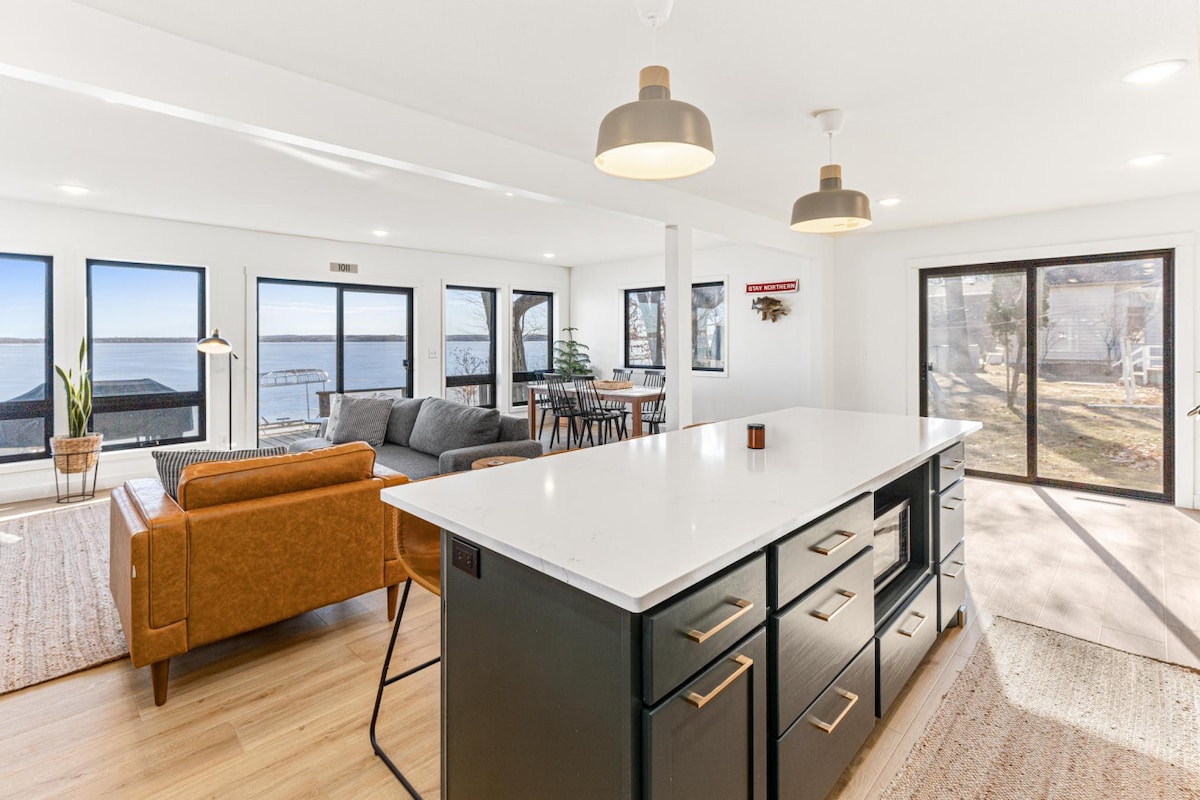
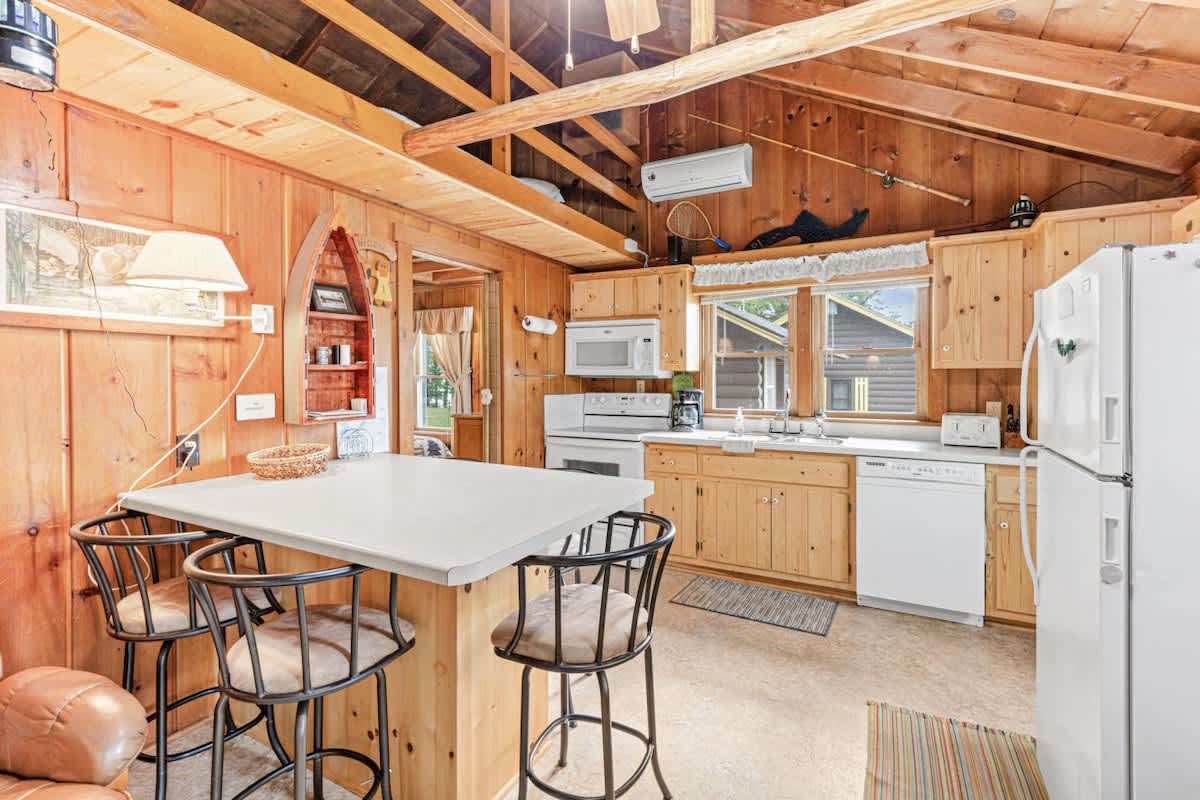
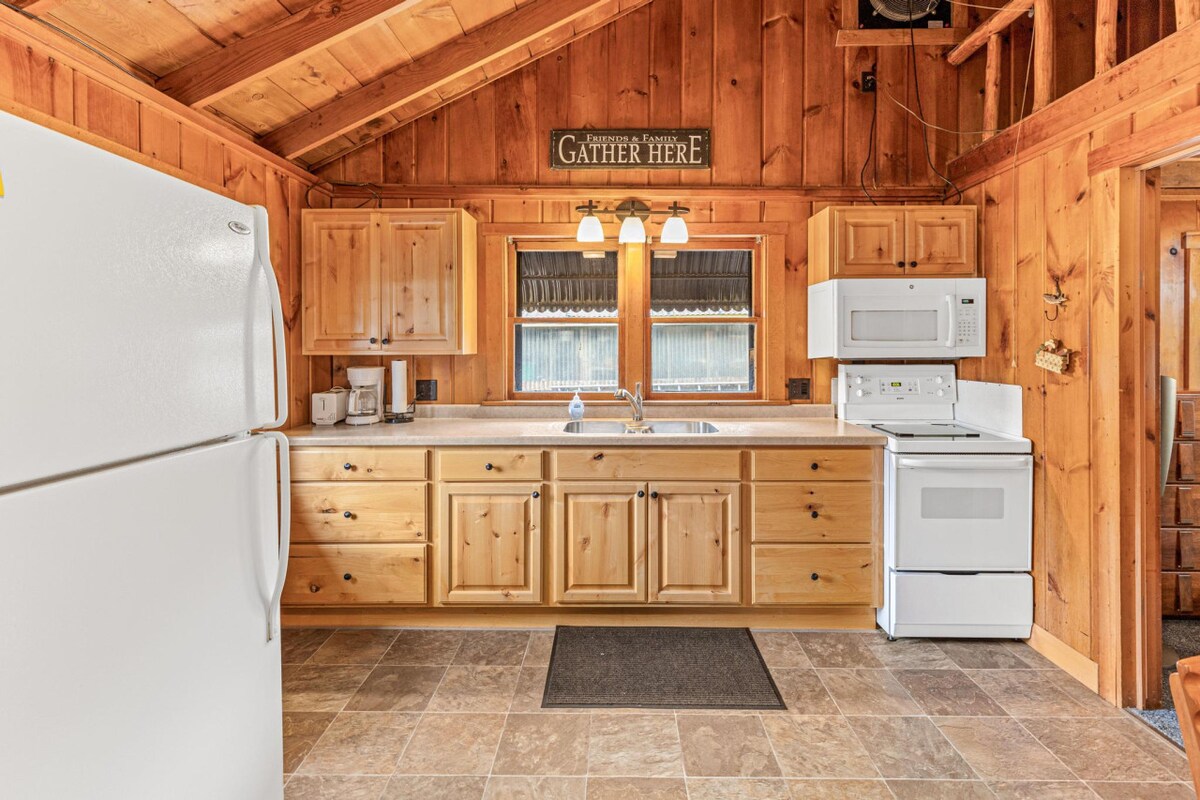
Base Camp: Lakefront Cabins Near the Best Paddling
Stay on the water — paddle from the dock, not from a parking lot.
Hiking Trails Near Wisconsin Lakes
Pair your paddling trip with a hike on the Ice Age Trail, North Country Trail, or Chequamegon-Nicolet Forest trails. The Stay Northern Trails Guide lists northern Wisconsin hiking trails with mileage, difficulty, and nearby cabin rentals. Visit staynorthern.com/trails?type=hiking
Kayaking FAQ
Do I need a license to kayak in Wisconsin?↓
Can you kayak the Namekagon River in Wisconsin?↓
Where can I rent a kayak near Spooner, Wisconsin?↓
Is it safe to kayak on Wisconsin lakes in summer?↓
What wildlife can I see while kayaking in northern Wisconsin?↓
Related Guides
 Trips
TripsThe Perfect Family Weekend in Spooner, Wisconsin
Two days in a real northwoods town — fishing, great food, a historic theater, and craft beer you won't find anywhere else
 Destinations
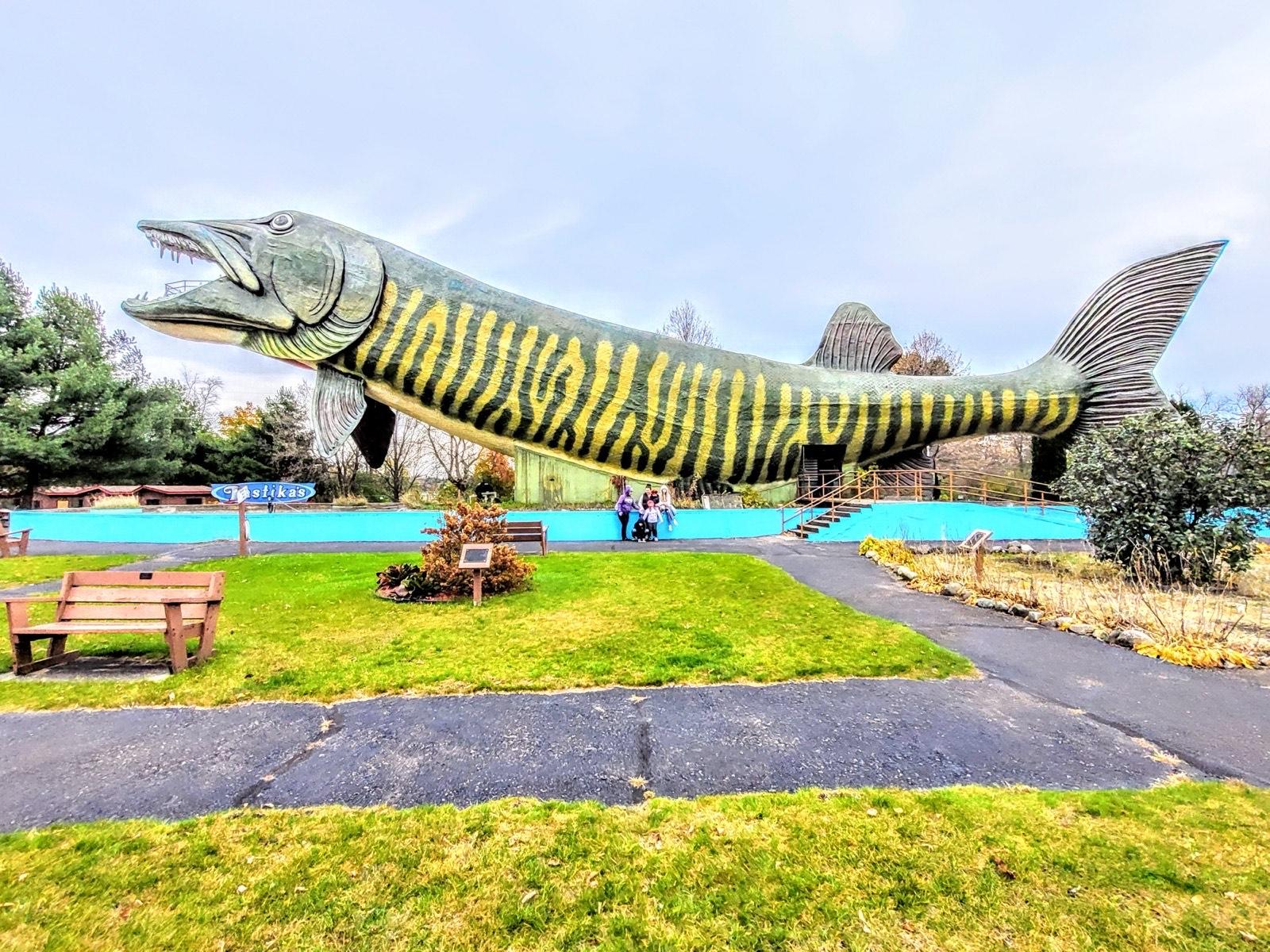
Hayward, Wisconsin: The Visitor's Guide (And a Local Secret)
Everything you need to plan a northwoods Wisconsin vacation — plus the hidden lakes 30 minutes south that most tourists never find
Ready to Book?
Browse lakefront cabins near Spooner — book direct, no service fees.
Browse Vacation Rentals →