
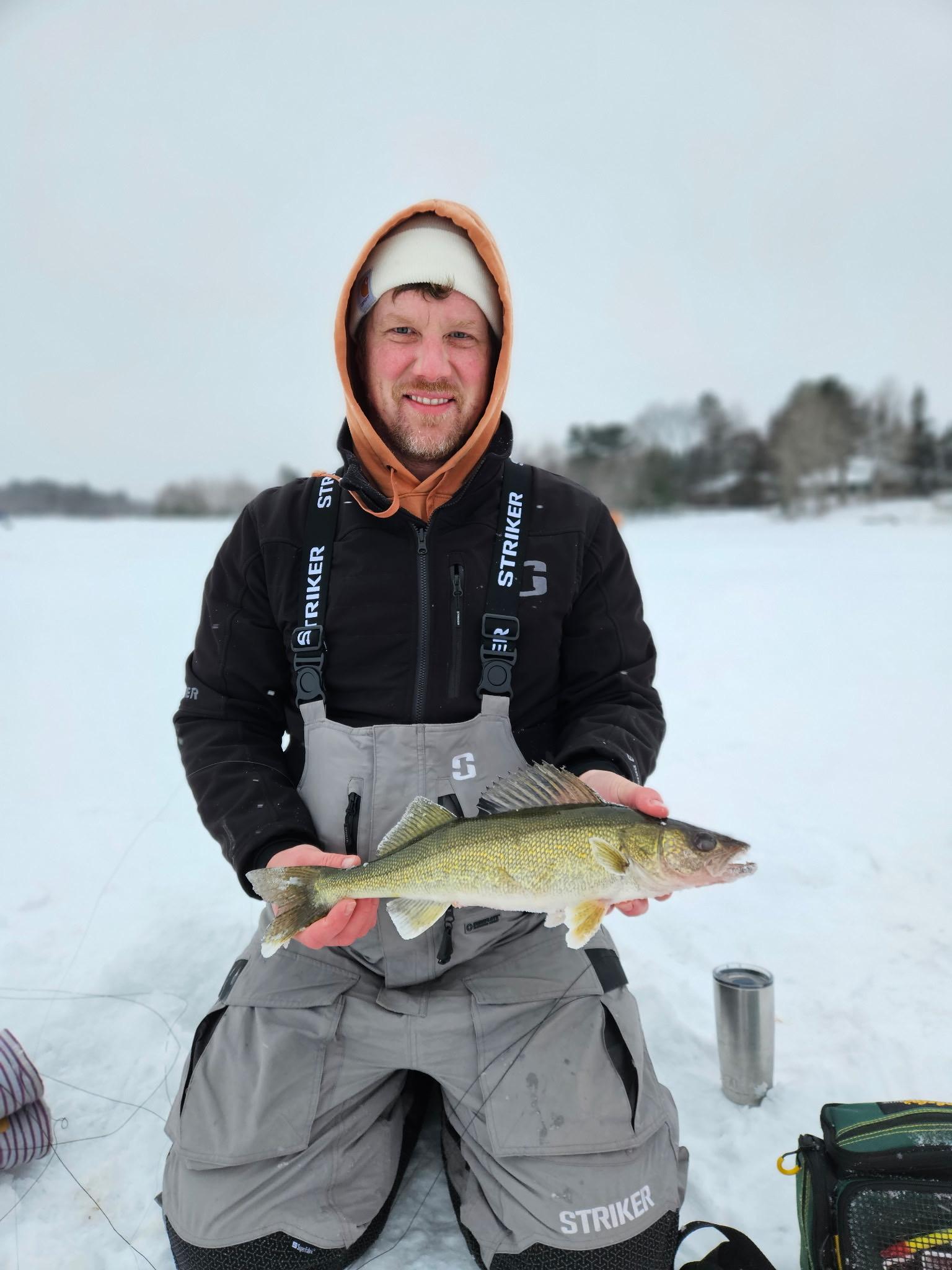
Catching Walleye Through the Ice in Wisconsin
Tactics, locations, and timing for Wisconsin's most sought-after ice fishing target
The Short Answer
Wisconsin walleye ice fishing is best in two windows: early ice (December–early January) when fish are active on mid-lake structure in 15–25 feet, and late ice (February–early March) when walleye move shallower and feed aggressively. The Spooner and Shell Lake area lakes produce consistently. Fish dawn through mid-morning and the two hours before dark — walleye feed in low light and the midday bite is slow.
Why Walleye Are the Premier Ice Fishing Target
Walleye are Wisconsin's most sought-after ice fishing species for two reasons: they're good to eat, and they're genuinely challenging to catch consistently through the ice. Unlike bluegill or perch, which can be found in numbers and caught with basic presentations, walleye require understanding of seasonal location, feeding windows, and presentation finesse. That difficulty is precisely what makes catching them so satisfying.
Through the ice, walleye go through distinct behavioral phases that dictate where and how to fish them. In early ice (December through early January), walleye are active and spread across mid-lake structure — humps, basin edges, points — in 15–25 feet of water during the day. At dusk and into the evening, they slide into shallower water at 8–15 feet to feed on perch and cisco moving up from the basin. In mid-winter (January), they settle into deeper, slower patterns. Late ice (February through March) brings them shallower again as the pre-spawn instinct kicks in. Knowing which phase you're in changes everything about how you fish.
Walleye Feeding Windows on Ice
Dawn through mid-morning (30 minutes before sunrise through 10am) and the last 90 minutes of daylight are the reliable walleye windows through the ice. Midday is the slowest period. The evening bite — roughly 4pm through dark — is often the most aggressive, with walleye moving from deep basin edges into 10–15 feet of water to chase cisco and perch. Night fishing under a shanty with a lantern (for light-sensitive fish, this seems counterintuitive but works) produces in some lakes.
Walleye Ice Fishing Tactics
Tip-ups with live golden shiners or suckers
The traditional Wisconsin walleye ice method: a tip-up set at mid-depth (2–4 feet off bottom) in 15–22 feet of water, baited with a live golden shiner or small sucker minnow on a quick-strike rig with two hooks. Set multiple tip-ups (Wisconsin allows 3 lines total) to cover multiple depths and distances from structure. Check them every 20–30 minutes; walleye sometimes run with bait slowly.
Jigging blade baits for active fish
A Swedish Pimple, Jigging Rapala, or Cicada jigged vertically over confirmed fish marks (watch your flasher) is the most effective active technique. Lift 8–12 inches and let the blade flutter back to the original depth — most strikes come on the drop. For walleye, tipping the treble hook with a small minnow head or eye dramatically increases strikes. Use a sensitive graphite rod with 6–8 lb fluorocarbon line.
Deadstick rod under a shelter
A second rod set motionless on a simple stand with a live minnow suspended 2 feet off the bottom — fished next to your jigging rod — often out-produces the jigging rod. Walleye will inspect a jigging presentation and then slide over to take the stationary bait. The combination of active and passive presentations covers both aggressive and neutral fish.
Best Lakes for Walleye Ice Fishing Near Spooner
Shell Lake in Washburn County is the most reliable walleye ice fishing lake in the region — consistent populations confirmed by DNR surveys, multiple public access points, and depth (to 53 feet) that creates good thermal structure through winter. Big McKenzie Lake is a strong second choice, known locally for quality walleye through the ice. Big Yellow Lake in Burnett County is a larger option with a strong walleye fishery that receives less pressure than Washburn County lakes.
For current conditions — ice thickness, which lakes are producing, what presentations are working — call a local Spooner or Shell Lake bait shop before your trip. This information changes week to week and no online source is as reliable as someone who was on the ice yesterday.
Top Walleye Ice Lakes
Consistent producers with good public access.
Shell Lake
Washburn County
Fish Species
Walleye Ice Fishing FAQ
What is the best bait for walleye ice fishing?↓
When is walleye ice fishing best in Wisconsin?↓
What depth do walleye suspend in winter?↓
How many tip-ups can you use for walleye ice fishing in Wisconsin?↓
Related Guides
 Seasonal
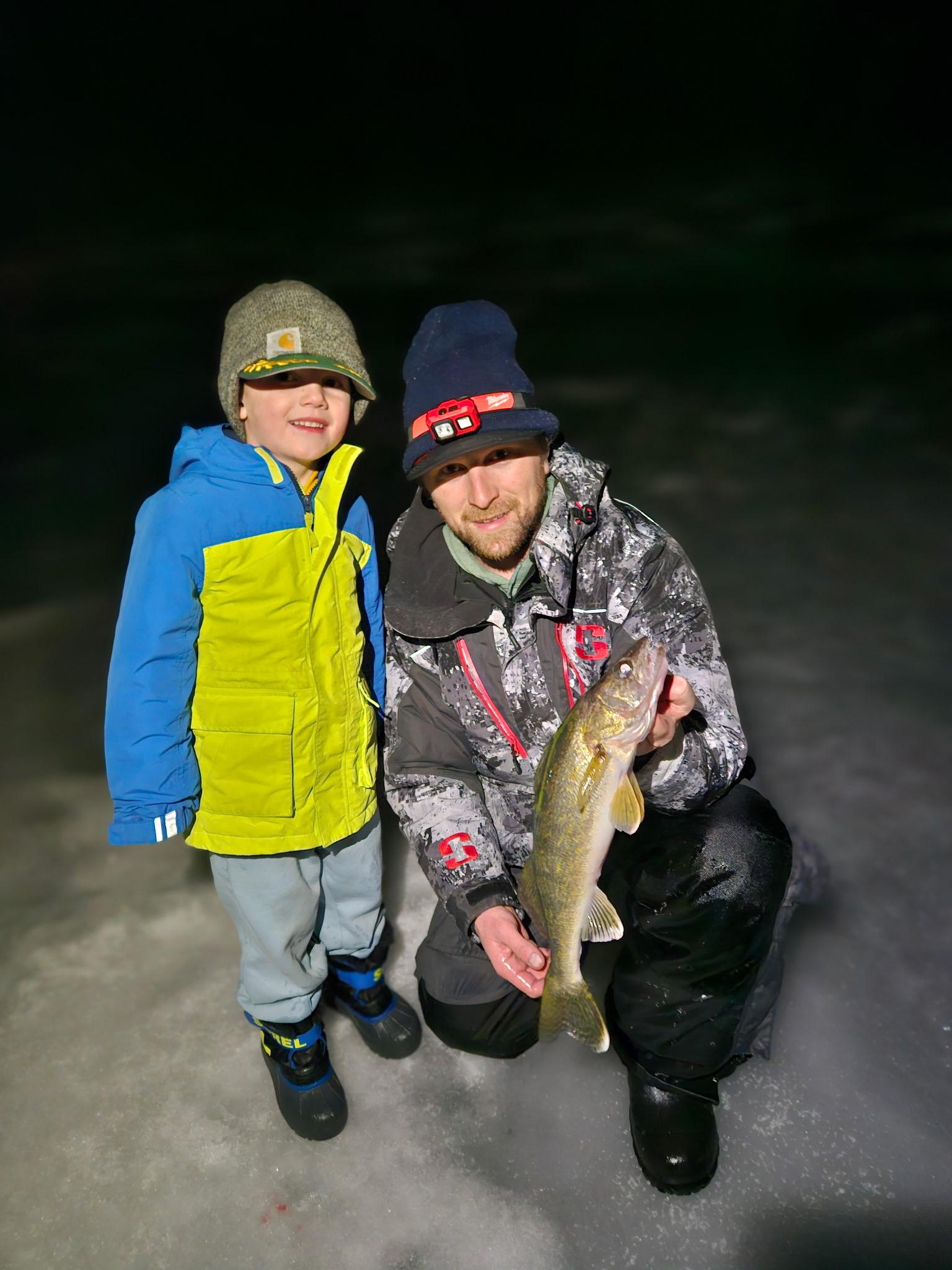
Taking Kids Ice Fishing in Wisconsin: Everything You Need to Know
Tips, gear, and the best lakes for making ice fishing a family tradition
 Seasonal
Ice Fishing in Wisconsin: The Complete Guide
When to go, how to stay safe, the best lakes near Spooner, and everything you need to catch fish through the ice
Ready to Book?
Browse lakefront cabins near Spooner — book direct, no service fees.
Browse Vacation Rentals →In This Guide
10 min read
Updated April 2026
Featured Towns