Ice Fishing in Wisconsin: The Complete Guide
When to go, how to stay safe, the best lakes near Spooner, and everything you need to catch fish through the ice
The Short Answer
Wisconsin's ice fishing season typically runs late December through mid-February in the north, with the best action in January when ice is thick and fish are concentrated on mid-lake structure. The lakes around Spooner and Shell Lake in Washburn County are excellent — walleye, perch, and crappie all fish well. Minimum safe ice: 4 inches for foot traffic, 5–6 inches for an ATV.
Wisconsin's Ice Fishing Culture
Wisconsin takes ice fishing seriously in a way that genuinely surprises outsiders. On a good January Saturday, the popular lakes north of Spooner look like small cities: rows of portable shelters, permanent ice shanties that have been parked on the same spot for decades, snowmobiles pulling tip-up rigs, and a general atmosphere of cheerful industry that has nothing to do with conventional recreation. This is a tradition, not a hobby — families that have fished the same lake, through the same holes, for three generations.
The northern Wisconsin ice fishing calendar is straightforward. Ice typically forms on the lakes around Spooner in mid-to-late December in a typical year (though this varies with climate). The prime window is January through mid-February — ice is thick, fish are concentrated in their winter holding areas, and the infrastructure (bait shops, rental shanties, local guides) is fully operational. Ice-out usually comes in late March or early April, ending the season. The Wisconsin DNR publishes an ice thickness map that's updated regularly through the season — check it before you go.
Ice Safety: The Non-Negotiable Rules
4 inches of clear blue ice: safe for foot travel. 5–6 inches: ATV or snowmobile. 8–12 inches: car or small pickup. Never drive on white or opaque ice — it is half as strong as clear ice. Always tell someone where you are going. Carry ice picks around your neck (they can save your life if you go through). Test ice thickness continuously as you move, especially near inlets, outlets, and pressure cracks. Never fish alone on ice in unfamiliar territory.
5 Species to Target Under the Ice
Walleye — the primary target
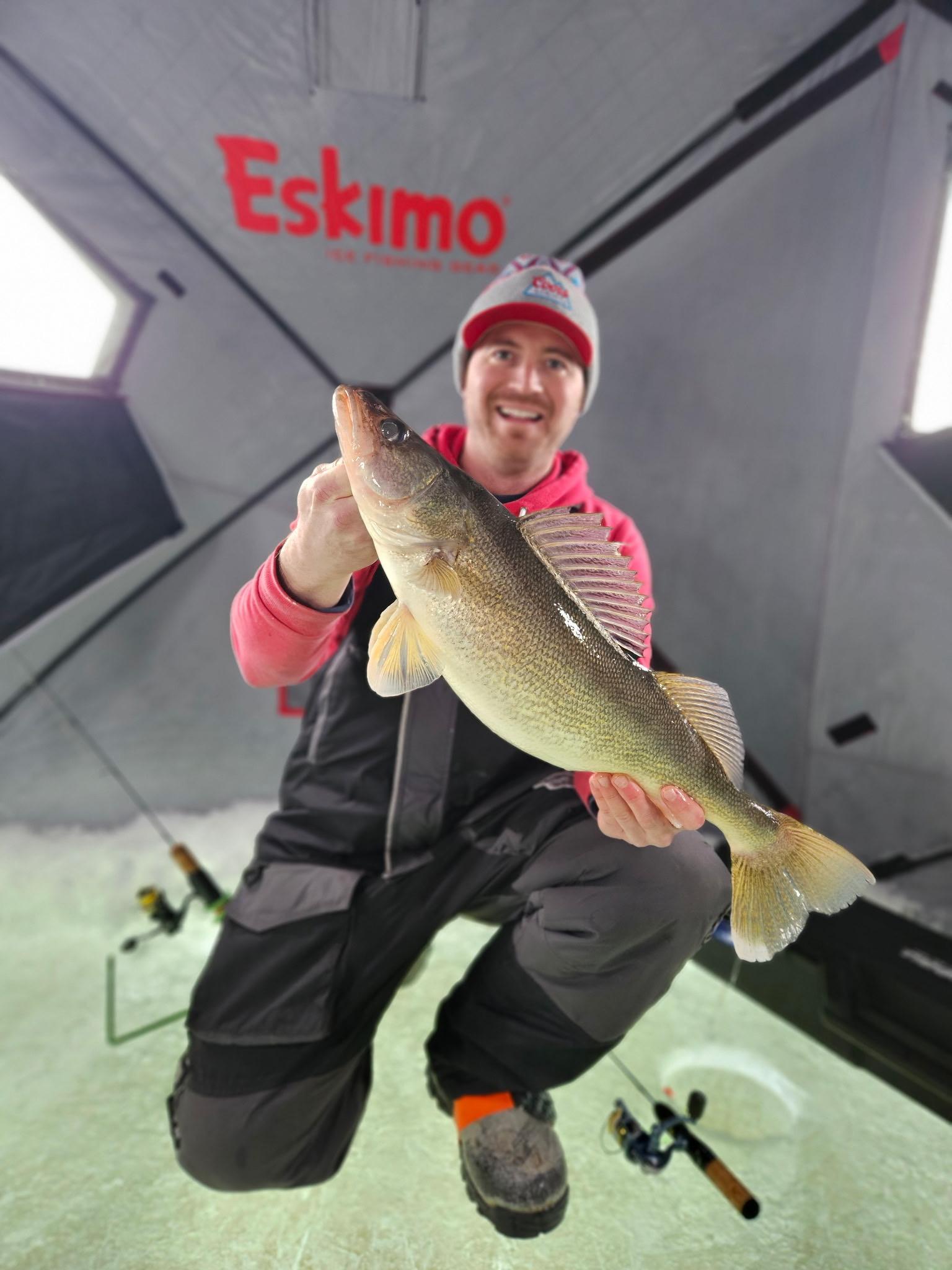
Walleye are the premier ice fishing species on northern Wisconsin lakes. They concentrate on mid-lake humps and basin edges in 20–35 feet of water during the day, then move to shallower gravel in 8–15 feet from dusk through midnight to feed. Tip-ups baited with live golden shiners or suckers near structure are the traditional approach. Jigging with blade baits or spoons tipped with minnow heads works well for active fish. The legal take in most of northern Wisconsin is 5 walleye per day, minimum 15 inches.
Perch — fast action and consistently edible
Yellow perch school in large numbers under the ice and will often bite aggressively all day, making them ideal for families or anyone who wants consistent action. Fish the weed edges in 8–15 feet of water with small tungsten jigs tipped with perch eyes or wax worms. Perch move in schools — if you catch one, you're usually in the middle of a school. Drop immediately after each catch to keep the school under your hole.
Crappie — the sundown bite
Crappie suspend in open water in 15–25 feet during the day and rise to within a few feet of the bottom of the ice at dusk and dawn. Small tubes, curly tail jigs, or micro spoons in white, pink, or chartreuse fished very slowly are the standard presentation. Electronics (a flasher or sonar unit) make crappie fishing dramatically more efficient — you can see the fish rise toward your bait and hesitate before striking.
Bluegill — non-stop panfish action
Bluegill are the ice fishing species for teaching kids the sport. They bite throughout the day, especially mid-morning after the early cold, and they aren't picky. Small jigs (1/64 to 1/32 oz) tipped with a single wax worm or spike fished in 6–12 feet of water near weed structure will produce consistently. Use light line (2–4 lb test) and a sensitive rod — bluegill bites through ice are subtle.
Northern pike — aggressive and unpredictable
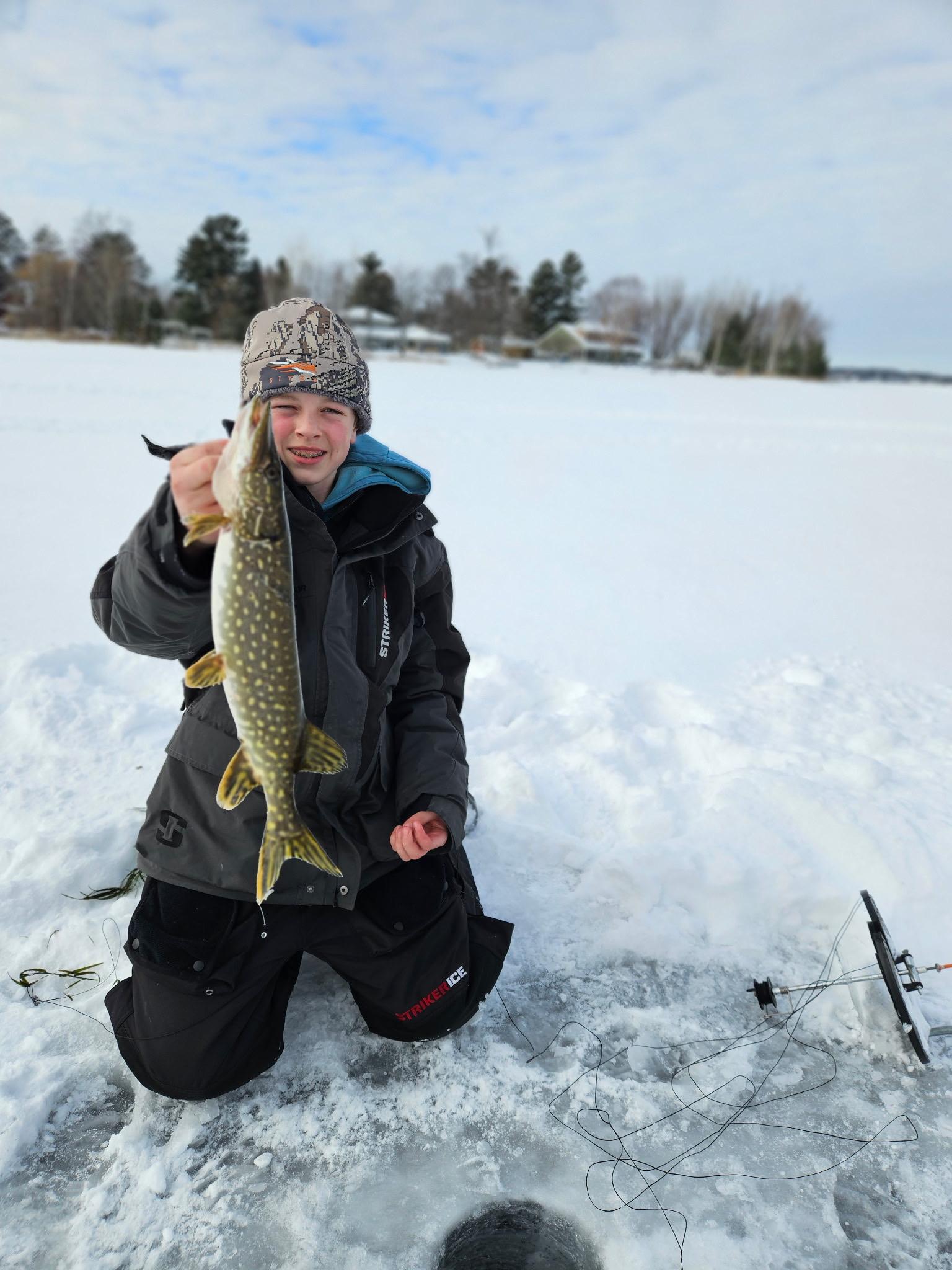
Pike are ice fished primarily on large tip-ups with heavy-gauge wire leaders and large suckers or large shiners. Set them in 4–8 feet of water over weed edges and watch for the flag. Pike hit violently and run hard — the strike is never subtle. In Wisconsin, most tip-up lines for pike use a quick-strike rig to reduce gut-hooking and support catch-and-release for larger fish. The northern Wisconsin regulation requires a 24-inch minimum on most waters.
Gear Basics: What You Actually Need
Ice fishing gear can get expensive fast, but the basics are simple: a hand or power auger to drill holes (6-inch is standard, 8-inch for larger fish or tip-ups), a short ice rod (24–36 inches) matched to your target species, a reel with fresh monofilament or fluorocarbon, and some way to stay warm. A 5-gallon bucket with a foam seat serves as gear hauler, tackle storage, and chair. A portable propane heater makes an enormous difference in comfort. That's the minimum kit.
The upgrade that changes the game is a sonar unit or ice fishing flasher (Vexilar and Marcum are the dominant brands in Wisconsin). A flasher shows you the bottom depth, marks fish in real time, and shows you the position of your jig relative to the fish. You can watch a crappie rise to inspect your bait, drop your presentation to meet a walleye that's holding two feet off the bottom, and instantly identify empty water versus productive water. It pays for itself in saved time and fish caught. Rent one from a local outfitter if you're not ready to buy.
Best Ice Fishing Lakes Near Spooner
The lakes around Spooner and Shell Lake in Washburn County are well-suited to ice fishing for several reasons: they're deep enough to hold fish through the season (preventing winterkill), they have healthy, well-documented fisheries from DNR surveys, and they receive significantly less pressure than the lakes around Hayward and Minocqua. Shell Lake itself is a consistent walleye and perch producer. Big McKenzie Lake is known for quality walleye. The smaller, more obscure lakes in the county produce panfish action that borders on ridiculous when you find the right hole.
For bait and local information, the Spooner area has tackle shops that track which lakes are producing and what species are hitting. The Washburn County Rod and Gun Club maintains ice fishing information through the season. Talk to the bait shop counter first — local knowledge on northern Wisconsin ice fishing is worth more than any online research.
Ice Fishing FAQ
When does ice fishing season start in Wisconsin?↓
Do you need a fishing license to ice fish in Wisconsin?↓
How many tip-ups can you use in Wisconsin?↓
What is the best lake near Spooner for ice fishing?↓
What temperature is too cold for ice fishing?↓
Related Guides
 Trips
TripsThe Perfect Family Weekend in Spooner, Wisconsin
Two days in a real northwoods town — fishing, great food, a historic theater, and craft beer you won't find anywhere else
 Fishing
The Best Walleye Lakes in Northern Wisconsin
DNR survey data, local tactics, and the specific lakes where you should actually be fishing
Ready to Book?
Browse lakefront cabins near Spooner — book direct, no service fees.
Browse Vacation Rentals →In This Guide
11 min read
Updated March 2026
Featured Towns